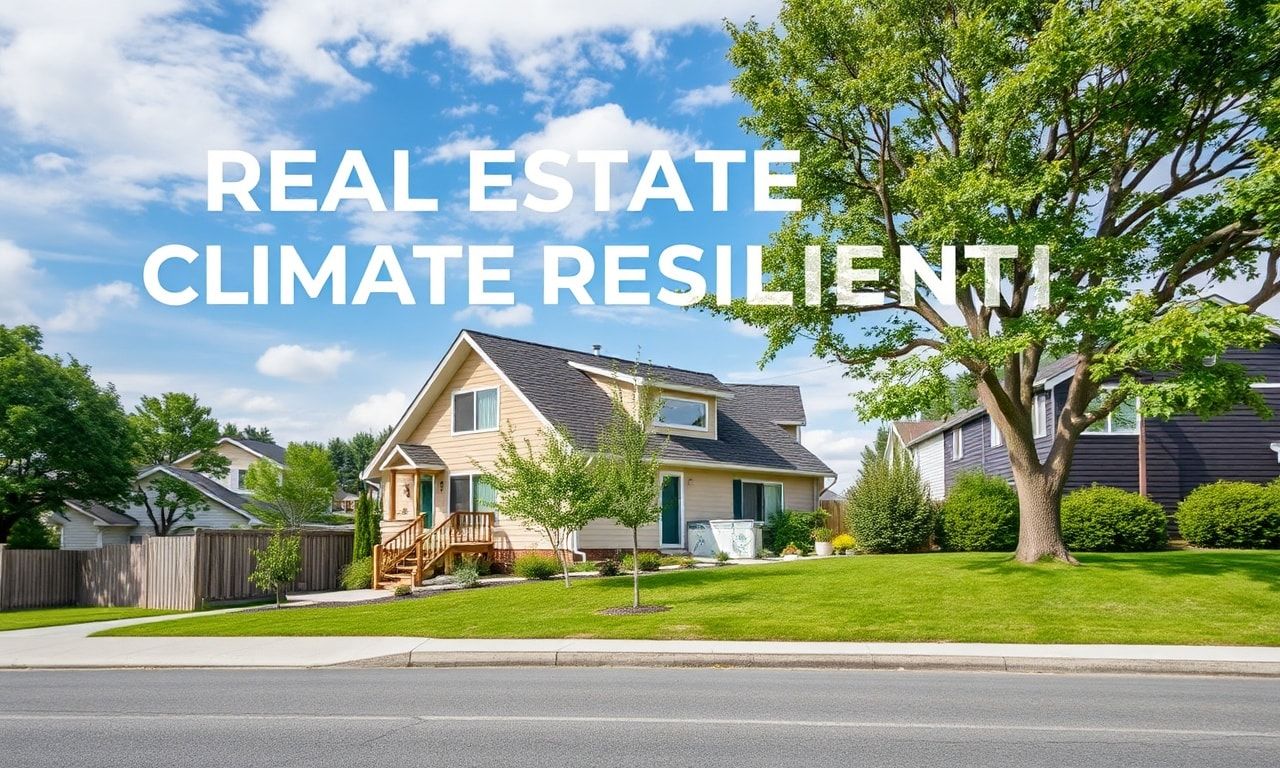
The Growing Importance of Climate Resilience in Real Estate
The real estate market is evolving, and one of the most significant shifts is the increasing emphasis on climate resilience. As weather patterns become more unpredictable, homeowners and investors are prioritizing properties that can withstand extreme weather conditions. This trend is not only about protecting investments but also about ensuring the safety and comfort of residents. Climate resilience is becoming a critical factor in property valuation, insurance costs, and long-term sustainability.
Understanding Climate Resilience in Property
Climate resilience refers to the ability of a property to withstand and recover from extreme weather events such as hurricanes, floods, wildfires, and heatwaves. This concept encompasses various aspects of a property, including its location, construction materials, design, and infrastructure. For instance, homes built on elevated grounds are less susceptible to flooding, while those with impact-resistant windows can better withstand high winds. Understanding these factors can help real estate professionals and homeowners make informed decisions about property investments.
Incorporating climate resilience into real estate involves a holistic approach. It starts with selecting the right location, avoiding areas prone to natural disasters. Additionally, using durable and sustainable building materials can enhance a property’s resilience. For example, concrete and steel are more resistant to wind damage compared to wood. Moreover, integrating smart technologies, such as an emergency weather alert system, can provide early warnings and improve response times during extreme weather events.
Key Factors to Consider
When evaluating a property’s climate resilience, several key factors should be considered:
- Location: Properties in flood-prone areas should have proper drainage systems and be built on elevated grounds.
- Construction Materials: Using high-quality, durable materials can enhance a property’s ability to withstand extreme weather.
- Design: Architectural designs that minimize wind resistance and maximize natural light can improve resilience.
- Infrastructure: Robust infrastructure, such as reinforced roofs and impact-resistant windows, can significantly enhance a property’s resilience.
- Technology: Integrating smart technologies, such as weather monitoring systems, can provide real-time data and early warnings.
The Role of Technology in Enhancing Climate Resilience
Technology plays a pivotal role in enhancing climate resilience in real estate. Advanced weather forecasting systems, such as the emergency weather alert system, provide real-time data and early warnings, allowing homeowners to take proactive measures. Smart home systems can automate responses to extreme weather conditions, such as activating backup power supplies or closing storm shutters. Additionally, drones and satellite imagery can be used to assess property damage and plan for repairs.
Moreover, the Internet of Things (IoT) is revolutionizing the way we monitor and manage properties. Sensors can detect changes in temperature, humidity, and structural integrity, providing valuable data for maintenance and improvement. This data can also be used to create predictive models, helping homeowners and investors make informed decisions about property investments.
Case Studies and Success Stories
Several real estate projects have successfully integrated climate resilience into their designs. For example, the Breezewood community in Florida is built on elevated grounds and features impact-resistant windows and reinforced roofs. The community also incorporates smart technologies, such as weather monitoring systems and automated storm shutters, to enhance resilience. Another example is the Sea Palling project in the UK, which uses innovative engineering solutions to protect coastal properties from erosion and flooding.
The Future of Climate Resilience in Real Estate
The future of climate resilience in real estate is promising, with ongoing advancements in technology and construction materials. As the real estate market continues to evolve, climate resilience will become an increasingly important factor in property valuation and investment decisions. Homeowners and investors who prioritize climate resilience will not only protect their investments but also contribute to a more sustainable and resilient future.
In conclusion, climate resilience is a critical aspect of modern real estate. By understanding the key factors that contribute to climate resilience and leveraging advanced technologies, homeowners and investors can make informed decisions about property investments. The integration of climate resilience into real estate practices will not only enhance property values but also ensure the safety and comfort of residents in the face of extreme weather events.
As climate change continues to impact our world, it’s crucial for real estate investors to adapt their strategies; our latest article, future-proofing your property investments, offers expert advice on navigating this evolving landscape.
Investors looking to expand their portfolios internationally will find valuable insights in Japans legal awareness in real estate, a detailed examination of navigating foreign property markets.
As the real estate industry evolves, understanding how technology is reshaping news dissemination is crucial; delve into tech’s impact on journalism to stay informed.

